Heart Palpitations in Perimenopause: When Is a Racing Heart a Cause for Concern?
Oct 26, 2026
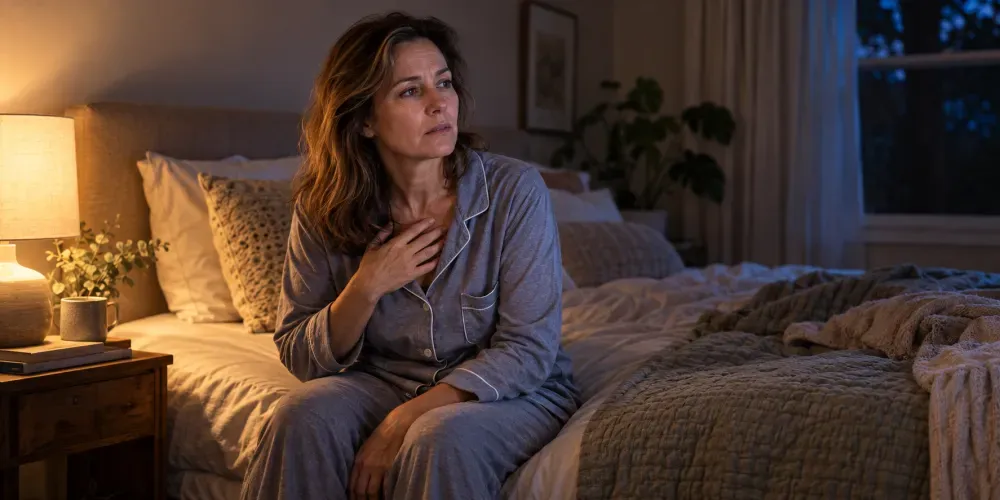
Have you ever been lying in bed when your heart suddenly feels as if it is pounding, fluttering, or skipping a beat? Perhaps it happens along with a hot flash. Perhaps it comes out of nowhere and leaves you wondering, “Is this perimenopause—or is something wrong with my heart?”
I hear this question from women in their 40s and 50s. Heart palpitations can occur during perimenopause and menopause, but we should not assume that hormones explain every episode. The right approach is to take the symptom seriously, look for its cause, and recognize the signs that call for urgent care.
At Menopause Solutions in Mount Pleasant, South Carolina, we help women across Charleston and the Lowcountry sort through symptoms that do not fit neatly into a single box. Here is what I want you to know about a racing or fluttering heart during the menopause transition.
“Palpitations” means that you are unusually aware of your heartbeat. You might describe it as:
A racing or pounding heart
A fluttering sensation in your chest or throat
A beat that seems to skip, followed by a stronger beat
An irregular rhythm
A sudden, brief burst of rapid beats
Some episodes last seconds; others last longer or recur. The sensation alone cannot tell us whether the underlying rhythm is harmless or needs treatment. If you can, note when it began, how long it lasted, whether your pulse seemed regular, what else you felt, and what you were doing at the time.
Palpitations are reported during the menopause transition. In a study following women across that transition, researchers found groups with high or moderate probabilities of reporting palpitations during perimenopause and early postmenopause. That finding shows how common the experience can be; it does not prove that a particular woman's palpitations are caused by estrogen changes or that they are automatically benign.
Hormonal fluctuations may contribute to changes in how you perceive your heartbeat. Hot flashes can also come with a temporary increase in heart rate. Sleep disruption, stress, and anxiety—sometimes intensified during perimenopause—may make palpitations more noticeable or more frequent. You can read more about the broader range of symptoms in our article Perimenopause: What's Normal and What's Not?.
It is tempting to call every new symptom “just menopause.” I would rather ask what else could be going on, especially when a symptom involves the heart.
The timing may overlap with perimenopause without menopause being the only explanation. Possibilities include:
Caffeine, nicotine, alcohol, or stimulant products. Coffee, energy drinks, some supplements, and medications for congestion or attention can trigger symptoms in some people.
Poor sleep, stress, or dehydration. These can contribute to a faster heartbeat or increase awareness of normal beats.
Anemia or iron deficiency. Heavy menstrual bleeding during perimenopause can be part of this story.
Thyroid problems. An overactive thyroid can cause a racing heart and symptoms that may overlap with menopause.
Medication effects or electrolyte changes. A review of prescriptions, supplements, and relevant medical conditions can help.
An abnormal heart rhythm. Premature beats and conditions such as atrial fibrillation can feel like palpitations and sometimes require specific treatment.
Anxiety can coexist with palpitations, but it should not become a shortcut diagnosis that ends the evaluation. Likewise, a normal hormone level on one day cannot establish the cause of an intermittent heartbeat symptom.
Call 911 for palpitations accompanied by chest pain or pressure, fainting, severe shortness of breath, or symptoms of a stroke, such as sudden weakness or trouble speaking. Do not drive yourself if you feel faint or seriously ill. Persistent rapid heartbeat with severe symptoms also needs immediate attention.
If episodes are new, increasingly frequent, prolonged, or troubling—even without those emergency signs—arrange a medical evaluation. Tell your clinician if you have a personal history of heart disease, a known rhythm problem, or a family history of sudden cardiac death. A symptom that happens to start during perimenopause still deserves an individual assessment.
We start with the details: what the episodes feel like, how often they happen, how long they last, and whether they occur with hot flashes, exercise, sleep, or certain substances. Your medical history, medications, blood pressure, and examination matter too.
Depending on your symptoms, a clinician may recommend an electrocardiogram (ECG), blood tests such as a blood count or thyroid test, or a wearable heart rhythm monitor to capture an episode. A brief ECG can be normal between episodes, which is one reason symptom timing is useful. Some women need further assessment by a primary care clinician or cardiologist. The goal is to identify the rhythm and any treatable contributor before deciding what to do next.
If you have heavy or changing periods as well as palpitations, mention both. The bleeding history may help us decide whether anemia needs to be checked. If poor sleep or nighttime hot flashes are prominent, our article Why Sleep Gets Harder in Menopause—And How to Get It Back may also be helpful.
There is no one-size-fits-all answer. If palpitations occur with bothersome hot flashes and night sweats, treating those symptoms may improve how you feel overall. But hormone therapy is not a treatment for an undiagnosed abnormal heart rhythm, and relief after treatment would not replace appropriate cardiac evaluation. Whether menopausal hormone therapy is suitable depends on your symptoms, health history, risks, and preferences.
I also would not recommend starting a supplement marketed for “hormone balance” as a substitute for finding out what the rhythm is. Some products contain stimulants or ingredients that may complicate the picture. Bring a list or photographs of everything you take to your appointment.
Keep a simple record: the date and time of each episode, approximate duration, associated symptoms, and possible triggers such as caffeine, alcohol, missed meals, poor sleep, exercise, or a hot flash. If a smartwatch records your heart rate or rhythm during an episode, save the reading to discuss with your clinician, but do not rely on a watch to rule out a problem.
You can also review whether you are getting enough sleep and fluids and whether a recent change in medication or stimulant use lines up with the symptoms. Avoid abruptly stopping a prescribed medicine without discussing it with the prescribing clinician. If an episode comes with the emergency symptoms above, seek immediate help instead of continuing to track it at home.
Palpitations in perimenopause are real, and many women experience them. They are also a symptom with several possible causes. You deserve an explanation that considers both the menopause transition and your cardiovascular health—not a dismissal based on your age or a promise that hormones are always the answer.
At Menopause Solutions, LLC, Rhonda Leach, DNP, WHNP, MSCP, and I provide individualized perimenopause and menopause care for women in Mount Pleasant, Charleston, Daniel Island, Summerville, and the surrounding Lowcountry. If you are trying to make sense of palpitations alongside hot flashes, disrupted sleep, or changing periods, schedule an appointment so we can review the full picture and help coordinate the evaluation you need. You can also explore our article on menopause and heart disease risk.
Are heart palpitations a normal part of perimenopause?
They are commonly reported, but “common” does not establish the cause in an individual person. New or recurring palpitations deserve attention, particularly if they are worsening or accompanied by other symptoms.
Why does my heart race at night during perimenopause?
Night sweats, sleep disruption, stress, caffeine, and other factors may contribute. An intermittent heart rhythm problem can also happen at night, so describe the episodes to your clinician rather than assuming they are hot flashes.
Can a hot flash make my heart pound?
Yes, a hot flash may be accompanied by a temporarily faster or more noticeable heartbeat. Palpitations that also happen at other times, persist, or cause concerning symptoms should be evaluated on their own merits.
When are palpitations an emergency?
Call 911 if they occur with chest pain or pressure, fainting, severe shortness of breath, or stroke symptoms such as sudden weakness or trouble speaking.
Carpenter JS, et al. Palpitations across the menopause transition in SWAN. Menopause. 2023.
American Heart Association. How serious are heart palpitations? Causes, symptoms and when to worry.
American Heart Association. Symptoms, diagnosis and monitoring of arrhythmia.
